
How Conversion-Ready Website Pages Improve SEO Lead Generation
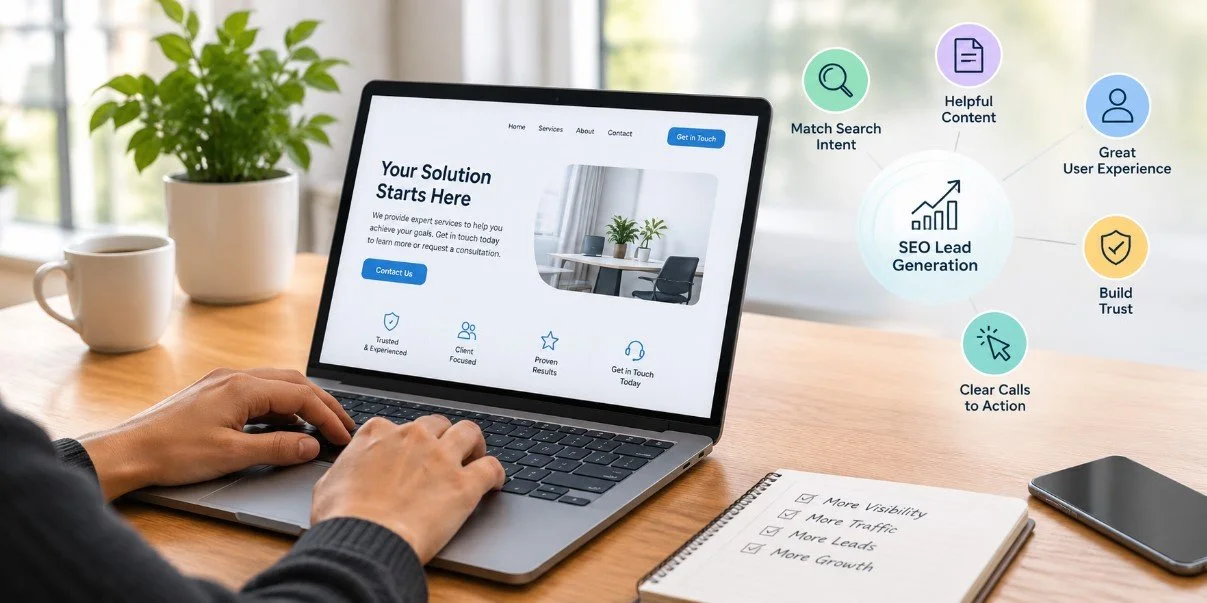
Getting a website page to appear in search results is only one part of attracting potential customers. The real opportunity starts when someone clicks through and lands on a page that clearly answers their needs and makes the next step easy.
A conversion-ready website page connects useful information with a clear action. It helps visitors understand the service, builds confidence, answers important questions, and guides them towards contacting the business, requesting information, booking a consultation, or taking another relevant step.
For businesses investing in SEO, this connection matters because strong rankings do not automatically create leads. A page can receive plenty of organic traffic and still produce very few enquiries if the content is unclear, the page is difficult to use, or the next step is missing.
Attimi focuses on creating a stronger connection between search visibility and meaningful business outcomes. The goal is not simply to attract more visitors, but to create pages that give those visitors a reason to stay, engage, and take action.
What Makes A Website Page Conversion-Ready?
A conversion-ready page is designed around both the visitor and the action the business wants them to take. It should provide enough useful information to answer the searcher's main concerns without making the journey confusing or overwhelming.
The page should also match the reason someone arrived there. A person searching for a specific service usually wants relevant information quickly, while someone researching a problem may need education before they are ready to make contact.
Several elements work together to make a page more effective:
Clear page purpose: Visitors should understand what the page offers within seconds.
Relevant content: Information should directly address the topic behind the search.
Simple navigation: Users should be able to move through the page without unnecessary distractions.
Visible calls to action: The next step should be easy to identify and understand.
Trust-building information: Reviews, credentials, experience, policies, and useful details can reduce hesitation.
Mobile-friendly design: The page should remain easy to read and use on smaller screens.
Fast page experience: Unnecessary delays can encourage visitors to leave before engaging.
Helpful supporting content: Answers to common concerns can help visitors feel more confident.
These elements do more than improve conversions. They can also create a stronger experience for people arriving from organic search.
How Search Intent Connects With Lead Generation
Search intent explains what a person is really trying to accomplish when they enter a search query. Understanding this intent helps businesses create pages that provide the right information at the right stage of the buying journey.
For example, someone searching for general information may not be ready to contact a business immediately. They may first want to understand a problem, compare possible solutions, or learn what a service involves.
A different visitor may already know what they need and be searching for a provider. Sending that person to a general homepage instead of a focused service page can create unnecessary friction.
A conversion-ready page should reflect the intent behind the search.
Informational intent: Give clear explanations and practical guidance.
Commercial intent: Help visitors compare options and understand benefits.
Service intent: Explain the service clearly and make enquiries simple.
Local intent: Provide relevant location, service, and contact information.
Action-focused intent: Make the desired next step obvious and accessible.
This approach supports search engine optimization in New Jersey by making content more useful to the people actually searching for relevant services. It also gives search engines clearer context about what each page covers and who it is designed to help.
Why Useful Content Can Influence Conversion Decisions
Visitors rarely make decisions based on a headline alone. They often need more information before they feel comfortable contacting a business, especially when the service involves a significant decision or a long-term commitment.
Useful content can answer concerns before they become barriers. Instead of forcing visitors to search elsewhere, a well-planned page can explain the process, outline key benefits, address common concerns, and show what makes the service relevant to their situation.
This does not mean filling every page with unnecessary text. The goal is to provide useful information in a format that is easy to scan and understand.
Answer practical questions: Explain information that could affect a visitor's decision.
Use simple language: Make important points easy to understand without unnecessary jargon.
Show relevance: Connect the service with problems or goals the visitor already has.
Organise information: Use clear sections so readers can quickly find what matters.
Support claims: Provide meaningful details that help establish confidence.
Keep the reader moving: End sections with information that naturally leads to the next step.
Businesses using local seo services can also strengthen their pages by addressing location-specific needs naturally. Relevant service areas, local concerns, and useful location information can make a page more valuable without turning it into a list of repetitive location terms.
How Page Experience Supports Better SEO Results
A visitor's experience can influence what happens after they arrive from search. If the page is difficult to navigate, overloaded with pop-ups, slow to load, or unclear about its purpose, users may leave before they understand what the business offers.
Good page experience starts with the basics. Text should be readable, important information should be easy to find, buttons should be usable, and the layout should work properly across devices.
The design should support the content rather than compete with it. Every major element should have a reason for being on the page.
Readable layouts: Give visitors enough spacing and clear visual structure.
Strong mobile usability: Make buttons, menus, forms, and content comfortable to use on phones.
Logical page flow: Arrange information in an order that matches the visitor's decision process.
Focused calls to action: Avoid presenting too many competing choices.
Accessible contact options: Make it simple to call, email, submit a form, or request information.
Useful visual elements: Use images and graphics where they help explain the service or process.
A strong digital marketing strategy in New Jersey should therefore consider what happens after a visitor clicks from search. Traffic and conversions should not be treated as completely separate goals.
Turning Organic Visitors Into Qualified Leads
Not every visitor will become a lead, and that is normal. The objective is to make it easier for the right visitors to recognise that a business can solve their problem and understand what to do next.
A qualified lead is more likely to emerge when the page connects the visitor's needs with a relevant service. This requires more than placing a contact button at the top and bottom of the page.
The entire page can gradually build a reason to take action. The opening should establish relevance, the middle should provide useful information, and the later sections should reduce uncertainty while making the next step clear.
Start with the visitor's problem: Show that the page addresses a real need.
Explain the solution: Make the service and its value easy to understand.
Build confidence: Include useful trust signals without making exaggerated claims.
Remove uncertainty: Address common concerns before asking visitors to take action.
Use relevant CTAs: Match the call to action with the visitor's likely level of readiness.
Keep forms practical: Ask for information that is genuinely needed at that stage.
For businesses looking to connect search visibility with measurable outcomes, this broader approach can be useful: How Revenue-Focused SEO Turns Search Visibility Into Customers And Revenue
Building Pages That Support The Whole Search Journey
One strong service page can attract visitors, but a connected website can guide them through several stages of research. This is why individual pages should not operate as isolated pieces of content.
A visitor may first discover an educational blog, then explore a service page, read about the company, and finally contact the business. Internal links can help create this natural journey while also helping search engines understand how different pages relate to one another.
The most effective website structures make useful information easy to discover.
Connect related pages: Link educational content to relevant service pages.
Use descriptive anchor text: Tell visitors what they will find after clicking.
Create clear content paths: Help users move from research to consideration to action.
Strengthen topic relationships: Group related information around important services and subjects.
Avoid unnecessary links: Every internal link should have a useful purpose.
Review older content: Update internal links when new pages or services are added.
Strong SEO services should therefore consider the complete website structure rather than focusing only on individual keyword rankings.
Using Calls To Action Without Making Pages Pushy
Calls to action are important because visitors need to know what they can do next. However, a page does not need to repeatedly tell someone to contact a business after every paragraph.
The best CTA usually feels like a natural continuation of the information. Once a visitor understands the service and sees why it may be relevant, a simple next step can feel helpful rather than disruptive.
Different visitors may also need different actions.
Early-stage visitors: Offer helpful resources or additional information.
Research-focused visitors: Encourage them to explore a relevant service.
Ready-to-act visitors: Provide a direct contact or consultation option.
Returning visitors: Make it easy to find the information they may have already reviewed.
Local visitors: Provide convenient contact and location details.
Testing different CTA wording, placement, and page layouts can help businesses understand what encourages meaningful engagement. The goal is not to pressure visitors, but to remove unnecessary steps between interest and action.
Common Mistakes That Can Reduce Page Conversions
Even pages with strong organic visibility can struggle to generate enquiries when small problems create friction. These issues are often easy to overlook because the page may appear complete from the business owner's perspective.
A useful review should consider the page from the visitor's point of view. Can they understand the service quickly? Can they find answers to important questions? Can they see what to do next without searching around the website?
Common problems include:
Unclear messaging: Visitors cannot quickly tell what the business offers.
Weak introductions: The opening does not connect with the searcher's reason for visiting.
Generic content: The page could belong to almost any business in the same industry.
Too many distractions: Extra banners, links, or pop-ups compete with the main action.
Hidden contact options: Visitors have to search for ways to get in touch.
Poor mobile layouts: Important content or buttons become difficult to use.
Keyword-heavy writing: Content sounds unnatural because search terms are prioritised over people.
Weak internal linking: Visitors have no clear route to useful related information.
Fixing these issues can make an existing page more useful without requiring a complete website rebuild.
Measuring Whether Pages Are Actually Working
SEO lead generation should be measured using more than rankings and traffic. These metrics show visibility, but they do not always show whether visitors are moving towards becoming potential customers.
Businesses should look at a combination of search, engagement, and conversion signals. The right metrics will vary depending on the business model and the purpose of each page.
Useful indicators can include:
Organic traffic: Shows whether search visibility is bringing visitors to the page.
Engagement signals: Helps identify whether people are interacting with the content.
CTA clicks: Shows whether visitors are responding to the next-step options.
Form submissions: Measures direct enquiry activity from the page.
Phone or contact actions: Helps track visitors who choose direct communication.
Conversion rate: Shows how effectively visits turn into desired actions.
Qualified leads: Provides a stronger view of actual business value.
Reviewing these signals over time can reveal which pages attract attention, which pages encourage action, and where visitors may be dropping out of the journey.
Turn Better Search Visibility Into Meaningful Enquiries
SEO works best when visibility and conversion are treated as connected parts of the same customer journey. A page should not simply attract a visitor from search. It should help that visitor understand the answer, evaluate the service, build confidence, and take a sensible next step.
Conversion-ready pages make this process easier by combining relevant content, clear messaging, useful internal links, strong page experience, trust signals, and focused calls to action. They can also help businesses get more value from the traffic they are already earning through search.
For businesses that want to turn organic visibility into stronger opportunities, contact us today to review how your website pages can better support both search performance and lead generation. Attimi can help businesses create a more connected approach where SEO, content, website experience, and conversion goals work together to support sustainable growth.