
How Google Maps Visibility Supports Local Lead Generation
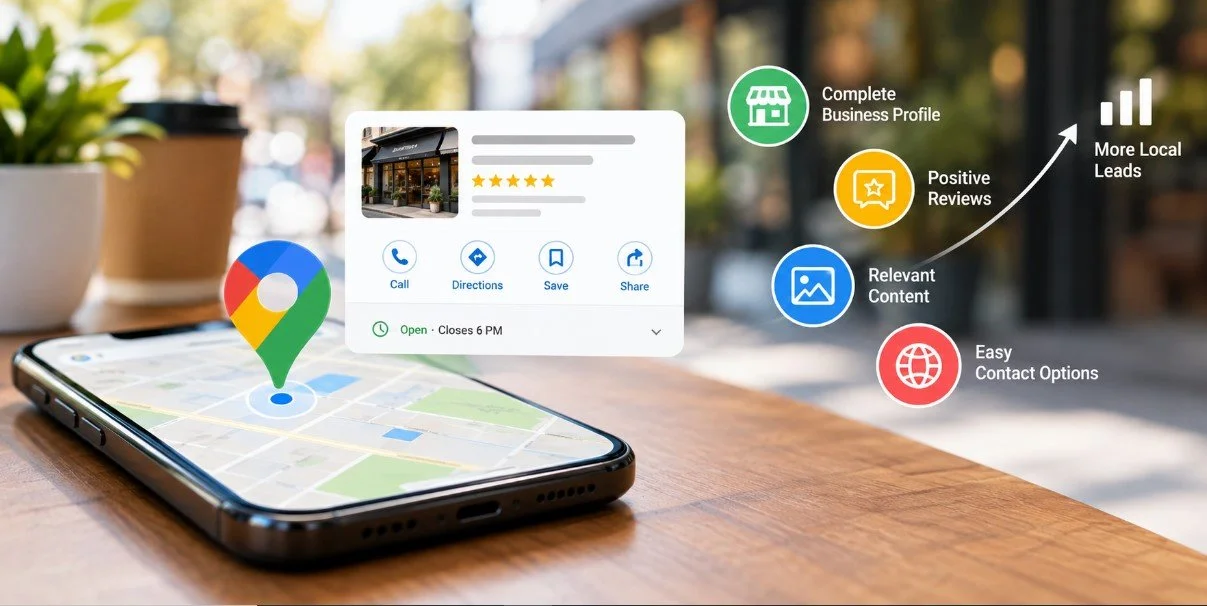
Finding a nearby business often starts with a Google search or Google Maps. People want quick answers about where a business is located, what it offers, when it is open, and whether other customers trust it. A strong Maps presence can put your business in front of people who are already searching for a relevant product or service.
Google Maps visibility can support Local Lead Generation by helping businesses appear when nearby customers are actively looking for their services. A complete Google Business Profile, accurate information, useful reviews, relevant website content, and a clear path to contact the business can turn visibility into meaningful enquiries. Attimi focuses on helping businesses build a stronger digital presence that connects local search visibility with real customer actions.
Why Google Maps Matters For Local Customers
Google Maps is more than a tool for finding directions. For many local searches, it is one of the first places people look before deciding which business to contact.
When someone searches for a service nearby, Google can show local businesses based on factors such as relevance, distance, and prominence. This means businesses need to provide clear and accurate information so Google can better understand what they offer and where they serve customers.
A visible profile can also make the decision process easier for potential customers.
Customers can quickly check your location and service area.
Searchers can see your opening hours before visiting.
Reviews can provide useful social proof.
Photos can give people a better idea of your business.
Website links can move interested visitors from Maps to your site.
The important point is that visibility is only the beginning. Your Google Maps presence needs to provide enough useful information to encourage the next action.
How Visibility Can Turn Searches Into Leads
A person searching for a local service often has a specific need. They may need a service today, want to compare nearby providers, or simply be looking for a reliable business to contact.
When your business appears for a relevant search, you have an opportunity to meet that need at the right moment. Google explains that local results are mainly influenced by relevance, distance, and prominence.
That makes relevance especially important for lead generation.
A profile that clearly explains its services gives customers a better understanding of what the business does. Accurate contact details, service information, hours, photos, and website links can then help the customer decide what to do next.
Relevant visibility puts your business in front of more suitable searchers.
Clear information reduces uncertainty before contact.
Strong reviews can help build confidence.
Easy contact options can shorten the path from search to enquiry.
Helpful website content can answer questions before a customer reaches out.
This creates a simple journey: search, discovery, evaluation, action.
Build A Stronger Google Business Profile
Your Google Business Profile is an important part of your local search presence. Google recommends keeping business information complete and accurate because this can help businesses appear for relevant local searches.
Start by making sure the basic information is correct. Your business name, address, phone number, website, hours, category, services, and other relevant details should accurately describe the business.
The profile should also reflect what customers actually experience. Avoid adding information simply because it contains a popular search term. Instead, make the profile useful and easy to understand.
Choose the most relevant primary business category.
Add appropriate services that accurately describe what you offer.
Keep opening hours updated when they change.
Add high-quality photos that represent the business clearly.
Check that your website and contact details are correct.
Review the profile regularly instead of treating it as a one-time task.
A complete profile gives both Google and potential customers more context about your business.
Use Reviews To Strengthen Customer Trust
Reviews can have a major influence on whether someone decides to contact a local business. People often use them to understand the experiences of previous customers before making a decision.
Google states that review count and review scores can contribute to local ranking, while positive reviews can help improve local visibility.
However, reviews should not be treated only as a ranking tactic. They are also useful sales content because they show potential customers what others think about your business.
Encourage genuine customers to leave honest feedback and make a habit of responding appropriately. A thoughtful response can show that the business pays attention to customer experiences.
Ask genuine customers for honest reviews after a completed service.
Respond professionally to both positive and negative feedback.
Look for recurring customer comments that can improve your service.
Never rely on fake or misleading reviews.
Use genuine feedback to understand customer expectations.
A healthy review profile can make your business feel more trustworthy before a customer ever visits your website.
Connect Maps Visibility With Your Website
Google Maps should not operate separately from your website. Your website can provide the additional information a customer needs after discovering your business through local search.
Google says business information can come from multiple sources, including publicly available website content, third-party data, users, and business owners.
This makes consistency important. Your website should clearly explain your services, locations, contact options, and other information that helps customers understand your business.
This is also where local seo services can support a wider search strategy by connecting your Business Profile with relevant website pages and useful local content.
Create dedicated pages for important services.
Make contact details easy to find.
Clearly explain the areas you serve.
Use natural location references where they make sense.
Link relevant blog content to appropriate service pages.
A customer who discovers your business on Maps should be able to move naturally to your website without encountering confusing or conflicting information.
Create Content That Supports Local Search Intent
Local customers do not always search using the exact name of a service. They may search for problems, solutions, comparisons, questions, or nearby options.
For example, someone may search for a service near them, ask whether a particular solution is suitable, or look for signs that they need professional help. Content can address these questions while giving Google more useful context about your business and its expertise.
A useful local seo agency strategy can help organise this content around actual customer needs instead of simply producing pages filled with location keywords.
Consider creating content around:
Common questions customers ask before contacting a provider.
Problems that your services can solve.
Service-specific guides and explanations.
Local factors that affect customer decisions.
Comparisons between different service options.
Practical advice related to your industry.
The goal is not to write content just for search engines. The goal is to answer questions that real customers are likely to ask.
For businesses exploring how search is changing beyond traditional results, Generative Engine Optimization For Local Content: How To Get Your Business Cited In AI Search can also provide useful context on creating content that is easier for AI-powered search systems to understand.
Make Your Local Signals Consistent
Search engines need reliable information to understand a business. Conflicting details across websites, directories, social profiles, and business listings can make that understanding more difficult.
Google explains that information used in local listings can come from several sources across the web. That makes consistency an important part of your broader visibility strategy.
Your business information should be reviewed across the places where customers may find you.
Keep your business name consistent across important listings.
Check that phone numbers are current.
Make sure addresses are accurate wherever applicable.
Update outdated opening hours.
Remove or correct old business information where possible.
Make sure website information matches your main business listings.
Consistent information can also make the customer experience smoother because people receive the same basic details regardless of where they discover your business.
Focus On Actions, Not Just Rankings
A high position on Google Maps can be useful, but rankings alone do not generate revenue. The real objective is to turn visibility into meaningful customer actions.
Think about what you want someone to do after finding your profile. They might call, visit your website, request information, book a service, send a message, or visit your location.
Your profile and website should make these actions straightforward.
Use clear contact options.
Make important service information easy to find.
Provide accurate business hours.
Keep your website navigation simple.
Give visitors a clear reason to take the next step.
Measure enquiries rather than focusing only on impressions.
This approach helps shift the focus from simply being seen to being useful.
Where New Jersey Local SEO Fits Into The Strategy
Businesses serving specific geographic markets need more than a generic online presence. They need content and business information that clearly communicate their local relevance.
For a company targeting customers across the state, New Jersey local seo can support a broader strategy by connecting location-focused website content with business profile optimisation and relevant customer searches.
The strategy should still feel natural. Local references should help explain where services are available rather than being inserted repeatedly for search engines.
Build useful location-specific service pages where appropriate.
Create content that addresses local customer needs.
Keep business information consistent across relevant platforms.
Connect location pages with related services and resources.
Track which local searches generate meaningful enquiries.
Strong local visibility comes from building a clear connection between the business, its services, its locations, and the customers it wants to reach.
Track The Signals That Matter
Tracking performance helps you understand whether better visibility is actually supporting lead generation. Looking only at rankings can give an incomplete picture.
A business may appear frequently in local searches but receive few enquiries. Another business may receive fewer impressions but attract highly relevant customers who are more likely to contact them.
Consider monitoring several types of activity.
Profile views can indicate how often people discover your business.
Website visits can show whether searchers want more information.
Calls can reveal direct customer interest.
Direction requests can indicate local intent for physical businesses.
Form submissions can show website-driven enquiries.
Review activity can provide insight into customer engagement.
The best metrics depend on the business model. A service provider may care more about calls and forms, while a physical location may also care about direction requests and visits.
Common Google Maps Mistakes To Avoid
Even a business with a verified profile can lose opportunities if the information is incomplete, outdated, or unclear.
Some businesses also focus heavily on keywords while overlooking the actual customer experience. Google does not offer a way to pay for better organic local ranking, and its local ranking system is designed around relevance, distance, and prominence.
Avoid shortcuts and focus on providing useful, accurate information.
Do not add irrelevant keywords to your business name.
Do not publish misleading business information.
Do not ignore negative reviews.
Do not leave outdated hours on your profile.
Do not send customers to pages that do not match their search intent.
Do not measure success using rankings alone.
A useful local presence should help customers make decisions, not simply attempt to manipulate search results.
A Practical Path From Maps To More Enquiries
Improving Google Maps visibility works best when it is treated as part of a complete local search strategy. Your profile, website, reviews, content, and customer experience should all support the same business message.
Start with the basics and improve each area gradually.
Review your Business Profile: Check your core information for accuracy and completeness.
Improve service information: Make it clear what your business provides.
Strengthen your website: Connect important services with useful local content.
Encourage genuine feedback: Build a consistent review process.
Improve customer pathways: Make calls, forms, bookings, or visits easy.
Measure lead activity: Connect visibility metrics with actual enquiries.
Keep information fresh: Review important details regularly.
This process gives your business a stronger foundation for turning local searches into real conversations.
Turn Local Visibility Into Your Next Customer Opportunity
Google Maps visibility can help businesses reach people who are already searching for relevant services nearby. But being visible is only one part of the process. Accurate information, strong reviews, helpful website content, consistent local signals, and simple contact options can all help move customers from discovery to action.
Attimi can help businesses build a more connected search strategy where local visibility supports broader lead generation goals. Contact us today to explore how a stronger local search presence can help your business attract more relevant customers and turn search interest into valuable enquiries.